
CEC premieres short film “Voices of the Pacific Flyway”
A new documentary, available in English, Spanish and Central Yup’ik, explores the connection between human communities and migratory birds along the Pacific Flyway
Montreal, 28 October 2019—The Commission for Environmental Cooperation has partnered with the Cornell Lab of Ornithology to produce a short documentary entitled Voices of the Pacific Flyway. The documentary, launched at the 8th Western Hemisphere Shorebird Group Meeting, features voices from three communities along the Pacific Flyway that are linked by a shared esteem for shorebirds.
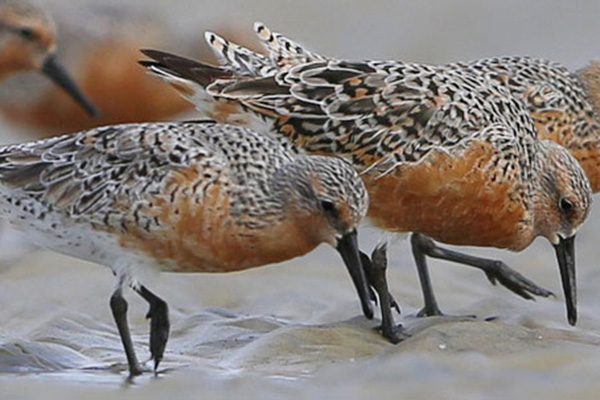
Shorebirds are marathon migrants. Each year they fly over thousands of miles of coastline, stopping over at multiple key sites. These spectacular migrations connect distant places—and people.
From the shores of Mexico’s Baja Peninsula, where a community celebrates the arrival and passage of its shorebird visitors; to Grays Harbor, Washington, where an international team of researchers works to decode the mysteries of their routes; and on to Hooper Bay, on Alaska’s Yukon-Kuskokwim Delta, where birds have been important food and cultural resources for thousands of years—shorebirds connect us.
The documentary was created as part of an initiative by the Commission for Environmental Cooperation to engage communities along shorebird migratory routes in conservation, as part of its mandate to conserve, protect and enhance the shared North American environment.
The film was produced by the Cornell Lab of Ornithology under the supervision and direction of the Commission for Environmental Cooperation and its partners, including the US Fish and Wildlife Service, US Forest Service, Alaska Department of Fish and Game - Division of Subsistence, Washington Department of Fish and Wildlife, the Mexican National Commission for Knowledge and Use of Biodiversity (Conabio), and local and regional partners along the Flyway.
Voices of the Pacific Flyway is available free of charge to any group involved in education and conservation along the Flyway, in English, Spanish, and Central Yup’ik.
About Cornell Lab of Ornithology
The Cornell Lab of Ornithology is a nonprofit, member-supported organization dedicated to interpreting and conserving the earth’s biological diversity through research, education, and citizen science focused on birds.